
Revised Schedule M: A Comprehensive Guide to Compliance and Quality Excellence in Pharmaceutical Manufacturing

PCD Pharma Franchise in Panchkula: Business Opportunities & Strategic Growth
September 23, 2026
Third-Party Manufacturing vs Loan Licence: Which Pharma Manufacturing Model Is Right for Your Business?
September 24, 2026Revised Schedule M | Dokcare Lifesciences
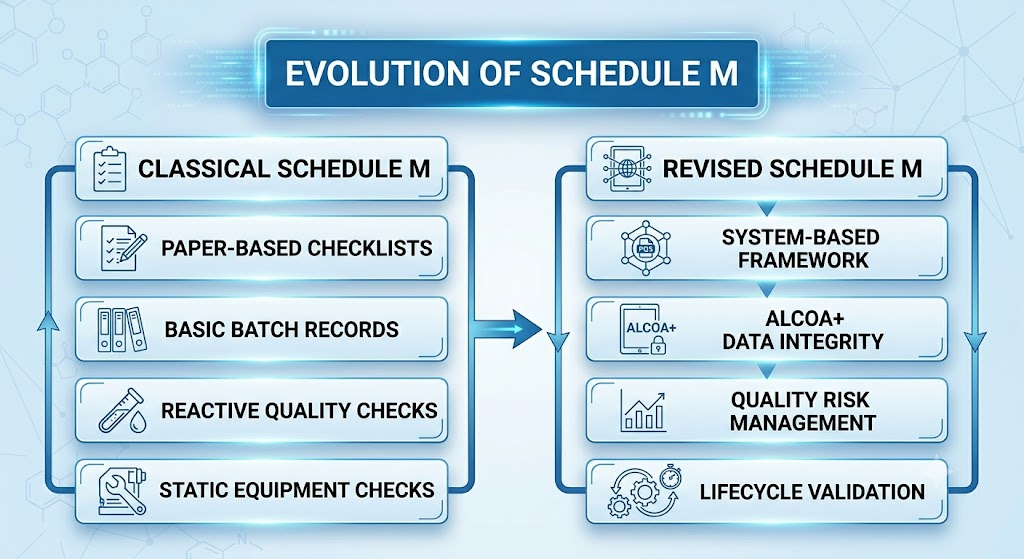
The Indian pharmaceutical industry is undergoing one of its most transformative regulatory evolutions in recent decades. With the notification of the Revised Schedule M under the Drugs and Cosmetics Rules, the Central Drugs Standard Control Organization (CDSCO) and the Ministry of Health and Family Welfare have elevated national manufacturing benchmarks. This critical update transitions the Indian domestic pharmaceutical landscape from a traditional paper-based compliance checklist to a robust, risk-based, and system-driven quality framework.
For modern drug manufacturers like Dokcare Lifesciences, staying aligned with updated regulatory norms is fundamental to ensuring patient safety, product efficacy, and operational continuity. In this comprehensive guide, we examine what the Revised Schedule M entails, key regulatory changes, implementation strategies, and how pharmaceutical leaders maintain strict adherence to these elevated quality standards.
What Is Revised Schedule M?
Schedule M of the Drugs and Cosmetics Rules, 1945, historically outlined the Good Manufacturing Practices (GMP) and specific requirements for factory premises, plant design, equipment, and operating standards in India.It serves as the legal foundation governing how medicines are produced, tested, stored, and distributed across the nation.
The Revised Schedule M introduces a modern regulatory framework designed to align Indian Good Manufacturing Practices with global benchmarks, such as those established by the World Health Organization (WHO-GMP) and the Pharmaceutical Inspection Co-operation Scheme (PIC/S).In simple terms, it requires pharmaceutical manufacturers to integrate quality into every stage of the product lifecycle—moving away from retrospective batch testing toward built-in, proactive quality systems.
Why Was Schedule M Revised?
The Indian pharmaceutical sector plays a vital role as a global supplier of high-quality affordable generic medicines and healthcare formulations. However, evolving global quality expectations, technological advancements, and complex supply chain networks necessitated a thorough update to domestic compliance standards.
- Harmonization with Global Standards:Aligning national regulations with international guidelines (such as WHO-GMP, ICH, and PIC/S) facilitates global market acceptance for Indian drug products.
- Mitigation of Quality Risks:Strengthening preventive controls reduces product failures, contamination risks, and adverse drug reactions.
- Emphasis on Data Integrity: Standardizing digital records and automated audit trails ensures total transparency across manufacturing operations.
- Enhanced Consumer Safety: Elevating manufacturing standards guarantees that every drug formulation consistently meets rigid safety and efficacy parameters.
Companies committed to quality, including Dokcare Lifesciences, recognize that compliance under the Revised Schedule M is not merely a legal requirement, but a strategic imperative that strengthens brand reputation and customer trust.
Key Changes Introduced in Revised Schedule M
The Revised Schedule M touches virtually every aspect of the pharmaceutical manufacturing process. The major structural and procedural updates include:
1. Mandatory Pharmaceutical Quality System (PQS)
Under the new guidelines, manufacturers must establish a formal Pharmaceutical Quality System (PQS) aligned with ICH Q10 principles.Senior management is held directly accountable for establishing effective quality governance, continuous management reviews, change controls, and robust Corrective and Preventive Action (CAPA) systems.
2. Implementation of Quality Risk Management (QRM)
Quality Risk Management (QRM) is now mandatory across all production and analytical stages.Manufacturers must scientifically evaluate, control, and review potential risks related to raw materials, machinery, environmental parameters, and processing steps.
3. Strict Data Integrity and ALCOA+ Principles
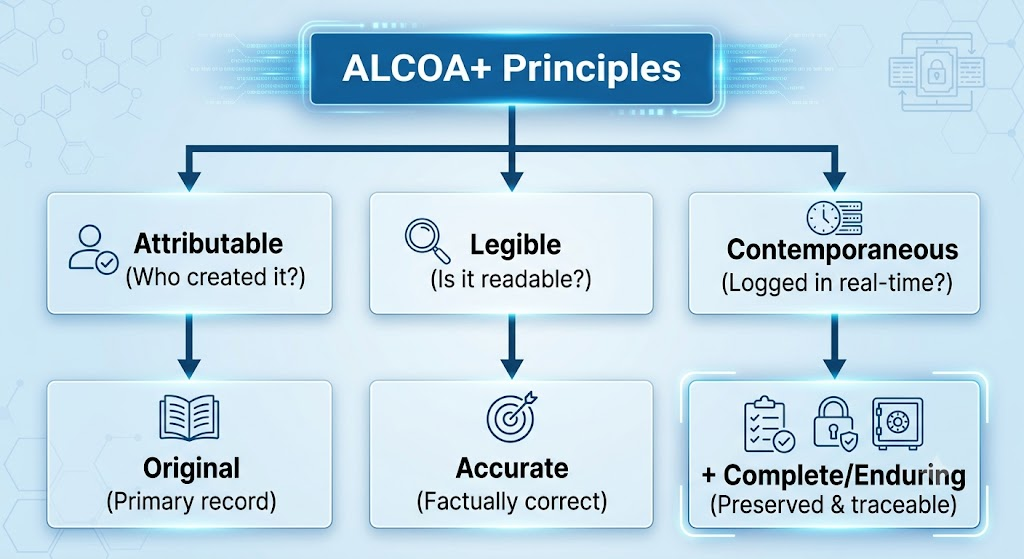
To prevent data tampering or inaccurate record-keeping, the revised guidelines enforce strict ALCOA+ standards (Attributable, Legible, Contemporaneous, Original, and Accurate, plus Complete, Consistent, Enduring, and Available).Electronic equipment and automated computerized systems must incorporate secure audit trails that log every user interaction and system change.
4. Lifecycle-Based Validation
The static approach of one-time equipment validation is replaced by continuous, lifecycle-based validation. Design Qualification (DQ), Installation Qualification (IQ), Operational Qualification (OQ), and Performance Qualification (PQ) must be maintained continuously alongside ongoing process qualification and cleaning validation protocols.
5. Enhanced Environmental Controls and Premises
Manufacturing facilities must enforce logical material and personnel flows to eliminate cross-contamination risks.Controlled cleanrooms with verified HVAC (Heating, Ventilation, and Air Conditioning) systems, continuous differential pressure monitoring, and strict environmental parameters are mandatory.
6. Dedicated Pharmacovigilance System
For the first time, pharmaceutical manufacturing facilities must establish a formal pharmacovigilance framework to collect, document, evaluate, and report adverse events associated with their manufactured drug products.
Revised Schedule M and GMP Compliance
Good Manufacturing Practices (GMP) represent the baseline operational philosophy required to ensure medicines are consistently produced and controlled according to quality standards. The Revised Schedule M directly elevates domestic GMP requirements by making quality assurance proactive rather than reactive.
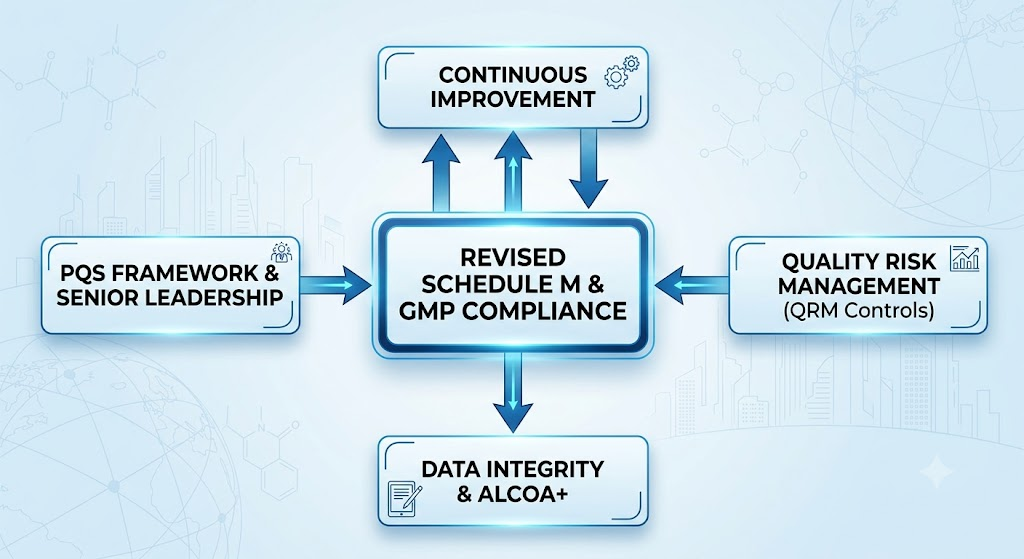
To maintain Schedule M compliance, manufacturing units must evaluate how daily shop-floor tasks connect with high-level quality objectives. This involves updating Standard Operating Procedures (SOPs), installing qualified utilities (such as Purified Water and Water for Injection systems), and ensuring calibrated quality control equipment is used in analytical laboratories.
For pharmaceutical organizations like Dokcare Lifesciences, adhering to modern GMP requirements under the revised standards reinforces a culture where product safety and consistent quality take priority at every stage of manufacturing.
Impact on Pharmaceutical Manufacturers
Transitioning to the Revised Schedule M presents both significant opportunities and distinct operational challenges for the Indian pharmaceutical industry.
Strategic Advantages
- Global Competitiveness: Meeting international standards opens doors to regulated export markets and lucrative contract manufacturing partnerships.
- Operational Efficiency:Standardized processes and systematic risk management reduce batch failures, reworks, and material wastage.
- Reduced Regulatory Exposure: Proactive quality control significantly lowers the likelihood of product recalls, warnings, or operational suspensions.
Operational Challenges
- Capital Expenditure (CAPEX):Upgrading infrastructure, cleanroom panels, computerized controls, and environmental systems requires substantial financial investment.
- Documentation Overhaul: Converting paper records to ALCOA+-compliant workflows or validated software platforms demands time and dedicated oversight.
- Cultural Shift: Training shop-floor staff to adopt a risk-aware, system-driven mindset requires ongoing professional education and leadership support.
Importance of Quality Management Under Revised Schedule M
Quality Management forms the backbone of the Revised Schedule M. Rather than treating Quality Assurance (QA) and Quality Control (QC) as isolated departments, the revised standards treat them as interconnected pillars within a comprehensive system.
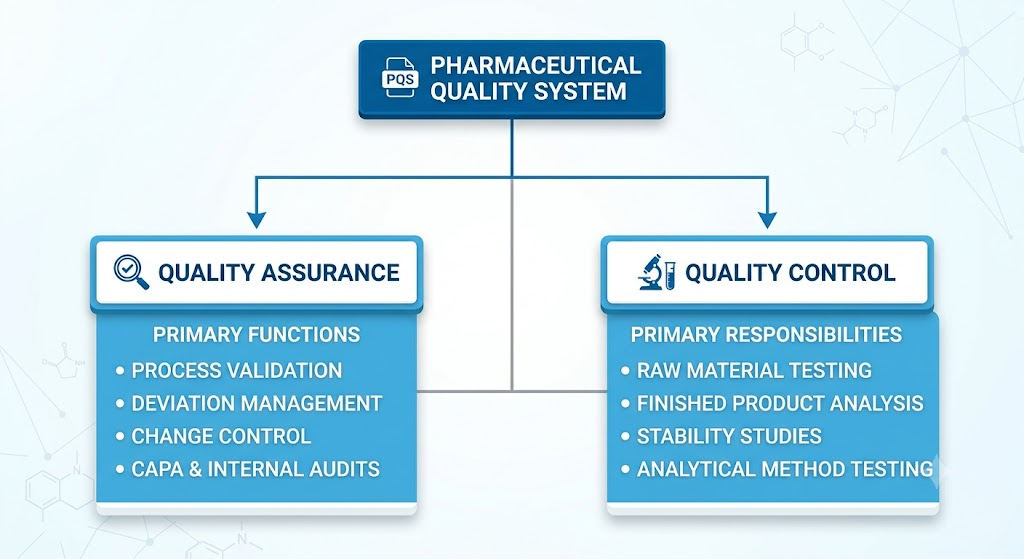
- Quality Assurance (QA): Focuses on process design, continuous monitoring, self-inspections, change controls, and deviation investigations. QA ensures that every system operates strictly as designed.
- Quality Control (QC): Concentrates on analytical testing of raw materials, packaging components, in-process samples, and finished dosage forms. QC laboratories under the Revised Schedule M must enforce robust data integrity controls, instrument calibration schedules, and validated analytical methodologies.
- Annual Product Quality Review (APQR): Manufacturers must regularly analyze batch data, analytical results, and out-of-specification (OOS) trends to verify consistent product quality across time.
By embedding structured quality management into daily production schedules, Dokcare Lifesciences maintains high precision across all product portfolios.
How Pharmaceutical Companies Can Prepare for Compliance
Achieving full compliance with the Revised Schedule M requires a methodical, step-by-step road map:
1.Conduct a Comprehensive Facility Gap Analysis:Operational Audit.
Review existing facilities, cleanroom designs, HVAC capabilities, and machinery against the updated regulatory standards. Identify infrastructure gaps and operational bottlenecks.
2.Formulate a Detailed Master Work Plan:Strategic Roadmap.
Develop a prioritized corrective action plan with timelines, resource allocations, and financial budgeting for necessary physical and digital upgrades.
3.Upgrade Infrastructure and Utilities:Engineering Standards.
Install compliant wall/ceiling panels, continuous environmental monitoring instruments, validated water systems, and segregation barriers to prevent cross-contamination.
4.Update SOPs and Adopt ALCOA+ Data Integrity Standards:Documentation Reform.
Revise Standard Operating Procedures to reflect risk-based principles. Transition to validated electronic software or implement secure, tamper-proof paper logging procedures with complete audit trail visibility.
5.Execute Equipment and Process Validation:System Qualification.
Execute comprehensive DQ, IQ, OQ, and PQ protocols for all production and laboratory machinery. Validate cleaning procedures and computerized software systems.
6.Conduct Workforce Training and Mock Audits:Quality Readiness.
Conduct intensive training for all personnel covering modern regulatory guidelines, hygiene protocols, and risk assessment strategies. Perform mock internal audits to verify overall audit readiness.
The Role of Leading Pharmaceutical Companies Like Dokcare Lifesciences
As quality guidelines evolve across India, established pharmaceutical brands play an important role in driving compliance and operational excellence.
Companies like Dokcare Lifesciences demonstrate how prioritizing regulatory awareness, robust quality systems, and structured manufacturing practices contributes to the overall reliability of healthcare products. By aligning manufacturing capabilities with updated regulatory benchmarks, Dokcare Lifesciences supports high-standard pharmaceutical manufacturing, enabling healthcare providers and patients to access reliable formulations backed by thorough quality assurance.
In a competitive market environment, pharmaceutical leaders that embrace regulatory updates proactively strengthen supply chain dependability and long-term brand equity.
Conclusion
The implementation of the Revised Schedule M marks a pivotal advancement for pharmaceutical manufacturing in India.By incorporating global standards such as Quality Risk Management, Pharmaceutical Quality Systems, lifecycle-based validation, and strict ALCOA+ data integrity principles, the updated framework ensures that domestic manufacturing operations deliver consistently safe, efficacious, and high-quality medicines.
While adapting to these regulatory updates requires dedicated planning, financial resources, and structured training, the long-term benefits far outweigh the initial investment. Forward-thinking companies like Dokcare Lifesciences show that embedding a strong quality culture into daily operations prepares pharmaceutical organizations for future growth, global competitiveness, and sustained compliance.
Frequently Asked Questions (FAQs)
1. What is the main difference between Old Schedule M and Revised Schedule M?
The old Schedule M relied heavily on basic paper documentation and static equipment checks.The Revised Schedule M establishes a risk-based, system-driven approach centered on a Pharmaceutical Quality System (PQS), mandatory Quality Risk Management (QRM), continuous lifecycle validation, and strict ALCOA+ data integrity controls.
2. Is compliance with Revised Schedule M mandatory for all pharmaceutical manufacturers in India?
Yes.Compliance with the Revised Schedule M is mandatory for all pharmaceutical manufacturing units operating in India to maintain their valid drug manufacturing licenses and ensure market distribution.
3. What does ALCOA+ mean in the context of pharmaceutical manufacturing?
ALCOA+ defines the global standards for data integrity. It requires records to be Attributable, Legible, Contemporaneous, Original, and Accurate, while also remaining + Complete, Consistent, Enduring, and Available throughout the record retention period.
4. How does Revised Schedule M impact quality risk management (QRM)?
Under the Revised Schedule M, Quality Risk Management is no longer optional.Manufacturers must systematically identify, evaluate, control, and review potential quality risks across all manufacturing stages—from raw material procurement and utility management to final product distribution.
5. How do companies like Dokcare Lifesciences support high quality standards in pharmaceutical manufacturing?
Pharmaceutical companies like Dokcare Lifesciences support high quality standards by establishing structured quality systems, adhering to updated regulatory guidelines, conducting systematic process evaluations, and implementing strict quality assurance and quality control measures across their manufacturing workflows.
